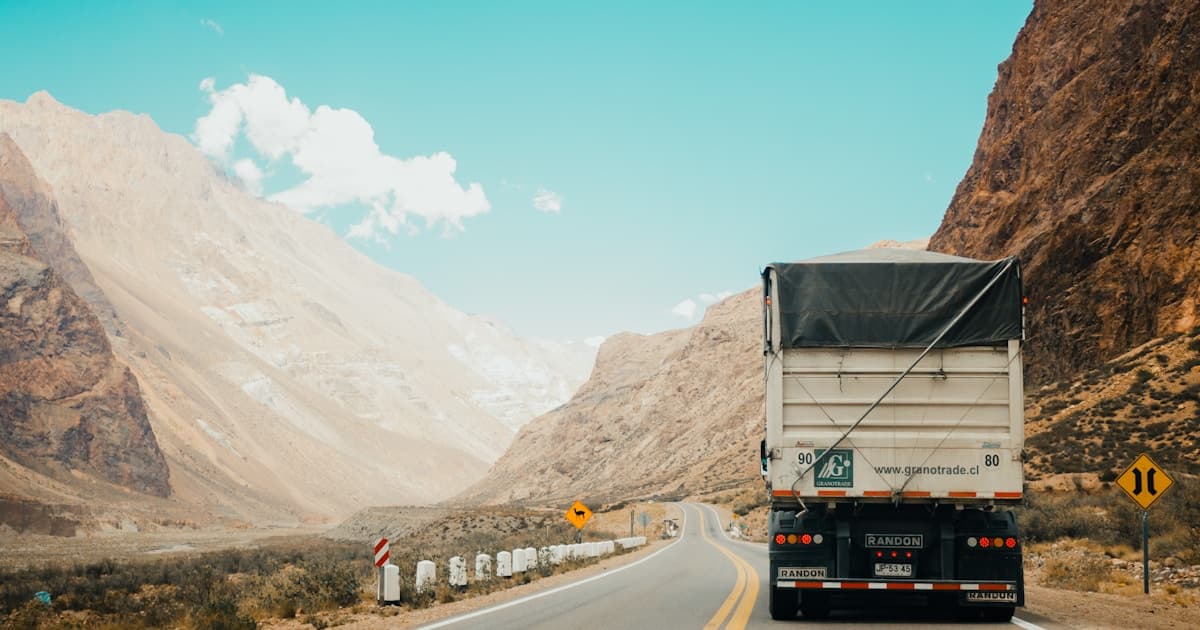
British Columbia asks more of a fleet than almost any other jurisdiction in Canada. In a single lane you can move a container off the Port of Vancouver, crawl through Lower Mainland congestion, and then climb 1,200 metres over a mountain pass where the law requires you to carry steel chains half the year. Kordova Tek is headquartered in Vancouver, B.C., so this is home turf — and BC's mix of port drayage, mountain geography, and strict commercial-vehicle enforcement rewards fleets that plan deliberately.
This guide is for BC-based fleet owners and for out-of-province and US carriers running into the province. It covers Port of Vancouver drayage, the Lower Mainland crossings, the mountain-pass chain laws, CVSE enforcement and the National Safety Code, BC's interior resource freight, and the BC-Alberta and BC-US corridors. If you run Highway 1 past the provincial line, see our Trans-Canada Highway 1 fleet guide, and BC's incoming commercial dash-cam mandate under Bill M217 is worth getting ahead of now.
What makes the Port of Vancouver central to BC trucking?
The Port of Vancouver is Canada's largest and most diversified port, and its container volume is the single biggest generator of drayage work in the province. The Vancouver Fraser Port Authority reported that the port's four container terminals handled roughly 3.8 million TEUs in 2025, up about 9% on the prior year, part of a record year that moved over 170 million tonnes of total cargo.
For a carrier, "drayage" means the short-haul truck move that takes an import container from a marine terminal to a nearby warehouse, or an export box the other way. Most of that container volume flows into the Lower Mainland's distribution belt — Surrey, Delta, Richmond, and the Fraser Valley — before it either stays local or transloads for the long haul east.
Two things make Port of Vancouver drayage its own discipline: terminal appointment and dwell rules that penalize late or missed pickups, and the congestion of the Fraser River crossings between the terminals and the warehouses. Getting the box is only half the job; getting it across the river on time is the other half.
What are the congestion pain points in the Lower Mainland?
The main pain points are the Fraser River crossings, because the Lower Mainland's freight, port, and warehouse geography sits on both sides of the river and every drayage move has to cross it. The two crossings fleets watch most are the Port Mann Bridge on Highway 1 and the George Massey Tunnel on Highway 99.
- Port Mann Bridge (Highway 1): tolls were removed on September 1, 2017, so the crossing is now free — but that also removed the price signal that had smoothed demand, and Highway 1 through the crossing carries heavy commuter and freight traffic.
- George Massey Tunnel (Highway 99): the aging four-lane tunnel, opened in 1959, is being replaced by an eight-lane immersed-tube tunnel. Early construction began in January 2026, with major construction anticipated around 2027. Until then, the existing tunnel and its counterflow schedule remain the reality, and it is a well-known bottleneck for Delta and Richmond drayage.
The planning lesson is the same as any congested port market: know your crossing windows, build slack into terminal appointments, and keep your customer informed when a bridge or tunnel backs up rather than explaining a missed appointment afterward.
When are chains required on BC mountain highways?
Chains are required on designated mountain routes from October 1 to April 30, and for heavy trucks that means carrying steel chains for seven months of the year. According to the Province of British Columbia, drivers must obey posted winter tire and chain signs during that window on routes including the Coquihalla (Highway 5), Highway 1 through Kicking Horse and Rogers Pass, Highway 3, and Highway 97C.
The requirement scales with weight:
| Vehicle class (licensed GVW) | Winter requirement |
|---|---|
| 5,000–11,794 kg | Carry chains or acceptable traction devices, unless equipped with 3-peak-mountain-snowflake or M+S tires |
| 11,794 kg and above (tractor-trailers) | Required to carry steel chains on most major highways |
The Province lists non-compliance fines ranging from $121 for not carrying chains to $598 for failing to chain up when required. On the Coquihalla specifically — a high-elevation route that climbs above 1,200 m — chain-up areas are marked and enforced, and conditions can flip from bare pavement to whiteout in the space of the climb.
BC also knows what happens when the passes fail. In November 2021, an atmospheric river washed out more than 30 sites across 130 km of the Coquihalla, taking out six bridges; the Province reopened it to commercial traffic in 35 days and finished a climate-resilient rebuild by late 2023. Check DriveBC before every mountain run and treat winter interior lanes as inherently variable.
How does CVSE enforcement work in BC?
BC's Commercial Vehicle Safety and Enforcement (CVSE) branch runs the province's weigh scales, inspection stations, and roadside enforcement, and it is more active than many out-of-province carriers expect. All commercial vehicles with a licensed GVW over 5,500 kg must report to weigh scales when open, including bobtail (tractor-only) moves.
Per CVSE, the province operates roughly 30 weigh-scale stations, using weigh-in-motion and automatic vehicle identification technology, and screens hundreds of thousands of commercial vehicles a year — targeting an average of more than 25,000 for closer inspection. Scales check weight, dimensions, driver qualifications, permit conditions, mechanical fitness, dangerous goods, and insurance.
For US and Alberta carriers, two habits keep you out of trouble: know which scales are on your route and open, and make sure the vehicle can pass a Level 1 inspection at any of them. A fleet that keeps clean inspection and maintenance records treats CVSE stops as routine; a fleet that doesn't treats them as an emergency.
What is the National Safety Code and how does it apply to BC carriers?
The National Safety Code (NSC) is a set of national commercial-carrier standards, supported by provincial regulation, built around three components: the driver, the vehicle, and the carrier. In BC, a carrier that needs one must hold a valid NSC safety certificate, carry evidence of it in the vehicle for inspection on demand, and provide the NSC number to ICBC when licensing.
BC tracks each carrier's on-road performance through a Carrier Profile — a record of demographic information, collisions, contraventions, and vehicle inspections that CVSE uses to identify higher-risk operators. Your safety record isn't just paperwork; it feeds a profile that can trigger audits and interventions.
This is where staying on top of compliance quietly protects the business. Expired inspections, missed maintenance intervals, and unlogged violations degrade a Carrier Profile over time — showing up as audits, downtime, and insurance pressure. Fleets that treat compliance as an ongoing clock rather than a scramble, and that build a data-driven safety culture, keep their profiles clean without heroics.
What freight moves through BC's interior and resource sector?
BC's interior lanes are dominated by resource freight — forestry products above all, plus mining and energy. British Columbia supplies roughly one-third of Canada's softwood lumber, and forest products (lumber and pulp) made up around 22% of the province's merchandise exports averaged over 2022-23, per the Province and the Business Council of BC. Mining adds copper, gold, molybdenum, and coal — coal being BC's single top export by earnings in recent years.
For fleets, that resource economy means long, mountainous interior hauls: logs and lumber out of the north and interior, mining products from remote sites, and inbound supplies to camps and mills. These lanes reward equipment suited to grade and weather and drivers comfortable on secondary mountain highways — a different profile from Lower Mainland port drayage.
How do the BC-Alberta and BC-US lanes work?
The two dominant out-of-province corridors are the mountain lanes east to Alberta and the border lanes south to Washington state. The BC-Alberta lane runs primarily on Highway 1 (Trans-Canada) through the Rockies and on Highway 5 (the Coquihalla and Yellowhead), tying the Lower Mainland to Kamloops, the interior, and on to Calgary and Edmonton — every kilometre of it subject to the winter chain rules above.
The BC-US lane centres on the Pacific Highway crossing between Surrey, BC and Blaine, Washington, where Highway 15 meets SR 543. Since the 1970s, trucks driving directly between the two have been required to use this crossing — the nearby Peace Arch does not permit commercial vehicles — and it is one of the five busiest commercial US-Canada crossings, moving over 3,000 trucks a day with dedicated FAST and commercial lanes on both sides. Running that lane efficiently means eManifest filed cleanly and, ideally, FAST/trusted-trader status; see our cross-border trucking guide for the full customs workflow.
Whether you're drayaging containers in Surrey, climbing the Coquihalla, or crossing at Pacific Highway, the constant is that BC lanes carry more variability than most — weather, grade, congestion, and inspection. Fleets that see live truck status and true profit by lane can tell which BC runs actually pay after the chains, tolls-turned-free, and delay, and which ones only look good on a map.
Frequently Asked Questions
When are chains required on BC mountain highways?
Under BC rules, drivers must obey winter tire and chain signs from October 1 to April 30 on designated mountain routes including the Coquihalla (Highway 5), Highway 1 through Kicking Horse and Rogers Pass, Highway 3, and Highway 97C. Commercial vehicles at 11,794 kg licensed GVW and above must carry steel chains on most major highways during that period.
How big is the Port of Vancouver for trucking?
The Port of Vancouver is Canada's largest and most diversified port. Its four container terminals handled about 3.8 million TEUs in 2025, and much of that container volume is drayed by truck to Lower Mainland warehouses and distribution centres.
Does BC require trucks to stop at weigh scales?
Yes. BC's Commercial Vehicle Safety and Enforcement (CVSE) branch requires all commercial vehicles with a licensed GVW over 5,500 kg to report to weigh scales when open, including bobtail tractors. BC operates roughly 30 weigh-scale stations across the province.
What is the National Safety Code and does it apply in BC?
The National Safety Code (NSC) is a set of national standards, supported by provincial regulation, covering the driver, the vehicle, and the carrier. In BC, carriers need a valid NSC safety certificate and are tracked through a Carrier Profile that records inspections, collisions, and violations.
What is the status of the George Massey crossing replacement?
As of 2026, the George Massey Tunnel on Highway 99 is being replaced by an eight-lane immersed-tube tunnel. Early construction work began in January 2026, with major construction anticipated around 2027, so fleets should continue to plan around the existing tunnel and its counterflow schedule for now.
Bottom Line
Trucking in British Columbia combines Canada's largest port, congested Fraser River crossings, mountain passes that demand steel chains from October through April, and an active CVSE enforcement regime built on the National Safety Code and Carrier Profiles. The interior runs on resource freight — forestry, mining, and coal — while the big out-of-province lanes head east to Alberta over the Coquihalla and south to Washington through the Pacific Highway crossing at Surrey. BC rewards fleets that plan for weather, respect the scales, and know which lanes actually pay after the climb.
TorqueAI helps BC fleets see live load status, protect appointments across the Fraser crossings, and track true profit by lane through the passes. Book a demo →