How to get a CVOR certificate in Ontario: steps, test and timeline
Applying for your first CVOR in Brampton or the GTA? Here are the documents, the $287 fee, the online test and a realistic timeline.


Key points
- Only Ontario issues a CVOR. You need one for trucks over 4,500 kg plated in Ontario.
- A new CVOR costs $287 with HST: a $255 processing fee plus a $32 learning and assessment fee.
- The old DriveTest exam is gone. Since November 1, 2024, you pass an online course and assessment within 6 months.
- After you pass, Ontario's posted standard is 5 business days to issue the certificate. Don't drive until it arrives.
To get a CVOR certificate, you apply to Ontario's Ministry of Transportation (MTO) online or by mail, pay a $287 fee, and pass an online CVOR learning and assessment within 6 months. Once you pass, the certificate comes in the mail and you can put your trucks to work. Here's every step, plus the paperwork habits that make your first year easy.
Only Ontario issues a CVOR
Lots of people search "CVOR Alberta" or "CVOR B.C." because CVOR is the best-known name in Canadian trucking. But only Ontario issues one. CVOR stands for Commercial Vehicle Operator's Registration, and it's Ontario's version of the carrier safety certificate.
Every province follows the same rulebook, the National Safety Code, a set of 16 safety standards built by provincial and federal transport officials through the CCMTA. Each province then runs its own certificate. In B.C., Alberta or Manitoba you get an NSC number instead. Our guide to getting an NSC number in every province covers those.
So if your trucks are plated in Ontario, whether you're in Brampton, Mississauga, Milton or anywhere else in the province, the CVOR is your ticket onto the road.
Who needs a CVOR certificate
According to Ontario's CVOR program page, you need a CVOR for:
- Trucks with a registered gross weight or actual weight over 4,500 kg (that includes farm-plated trucks)
- Buses that seat 10 or more passengers
- Tow trucks, concrete pumps and mobile cranes
A tractor pulling a 53-foot dry van out of a Brampton yard is way over 4,500 kg. So is a straight truck doing GTA deliveries. If you're starting a trucking company in Ontario, plan on getting a CVOR.
Trucks plated in another province don't need one. They run under the safety certificate from their home province.
Step 1: Pick the right application type
Ontario has two main application types for a brand-new CVOR:
- Individual: the certificate goes under your own name. This includes sole proprietors.
- Corporation: the certificate goes under the legal business name on your incorporation papers.
Get this right the first time. The ministry says it won't refund the fee if you pick the wrong type and the certificate gets issued wrong. If you've just incorporated "1234567 Ontario Inc." to run your trucks, apply as a corporation under that exact name.
A few special cases use the paper form instead, like a company representative applying for a partnership. Carriers whose old CVOR expired more than a year ago email CVOR@ontario.ca to ask for a re-entry application.
Step 2: Gather your documents
The full list is on the Get a CVOR certificate page. Here's what most new carriers will need:
- ID for the owner or each officer. An Ontario driver's licence number works. Ontario also accepts other ID, such as an Ontario Photo Card, or a copy of an out-of-province licence.
- A completed Consent and Authorization form. It's on the ministry's CVOR page. Fill it in and send it with your application.
- Business documents. Corporations send all their corporate history documents, such as the Articles or Certificate of Incorporation. Your Master Business Licence (Ontario's business name registration) may also be needed, depending on your setup.
- Fleet details. The types of vehicles you'll run and how many.
One handy detail: for your first year, Ontario assigns every operator a fixed 50,000 km per vehicle. That matters because Ontario looks at fleet size and kilometres when it scores your safety record. You don't have to guess your mileage on day one.
Put everything in one folder before you start. With a clean scan of each document ready, the application itself is a quick sit-down job.
Step 3: Apply and pay the $287 fee
You can apply online through the Ontario CVOR page, or mail or fax the paper form to the MTO CVOR Processing Unit in St. Catharines.
As of November 2026, the fee for a new CVOR is $287, HST included. That's a $255 processing fee plus a $32 fee for the learning and assessment.
Step 4: Pass the CVOR learning and assessment
This is the "CVOR test" everyone asks about, and it got a lot easier to schedule. Since November 1, 2024, Ontario has used an online learning and assessment instead of the old written test at DriveTest centres. No more booking a slot and driving across town.
Who has to take it?
- Ontario-based applicants getting their first CVOR
- Applicants whose last CVOR expired more than 3 years ago
After you apply, the ministry sends a letter with your deadline. You have 6 months to pass, and you need to finish by the day before the expiry date on that letter. Miss it and you start over: new application, all fees paid again.
For study material, the Commercial Vehicle Operators' Safety Manual is MTO's plain-language rulebook. It was the study guide for the old test, and it covers what you're on the hook for as an operator: hours of service, trip inspections, vehicle maintenance, driver records and more. Reading it isn't just test prep. It's the playbook for staying out of trouble.
How long does a CVOR take?
The biggest piece of the timeline is in your hands. Ontario's business service standards say the certificate will be issued within 5 business days after you complete the learning and assessment. Then it travels by mail. You can't run your trucks until it arrives.
The ministry also needs time to process your application and send your learning letter, and that part can vary. So the fastest path is simple: send a complete application, and do the course the week your letter shows up.
| Step | What you do | Cost (as of Nov 2026) | Time |
|---|---|---|---|
| 1. Check you need one | Confirm your truck is over 4,500 kg and Ontario-plated | Free | 10 minutes |
| 2. Pick application type | Individual (incl. sole proprietor) or corporation | Free | Get it right; wrong type isn't refunded |
| 3. Gather documents | ID, Consent and Authorization form, business papers, fleet info | Free | A day or less if organized |
| 4. Apply and pay | Online, or mail/fax to MTO in St. Catharines | $287 incl. HST | Processing time varies |
| 5. Learning and assessment | Online course and assessment | Included in the $287 | Up to 6 months; your pace |
| 6. Certificate issued | Wait for it in the mail before operating | Free | 5 business days after you pass, plus mail |
| 7. Renew | Online or by mail/fax | $51 | Every 1 or 2 years, based on safety rating |
What changes once your CVOR number arrives
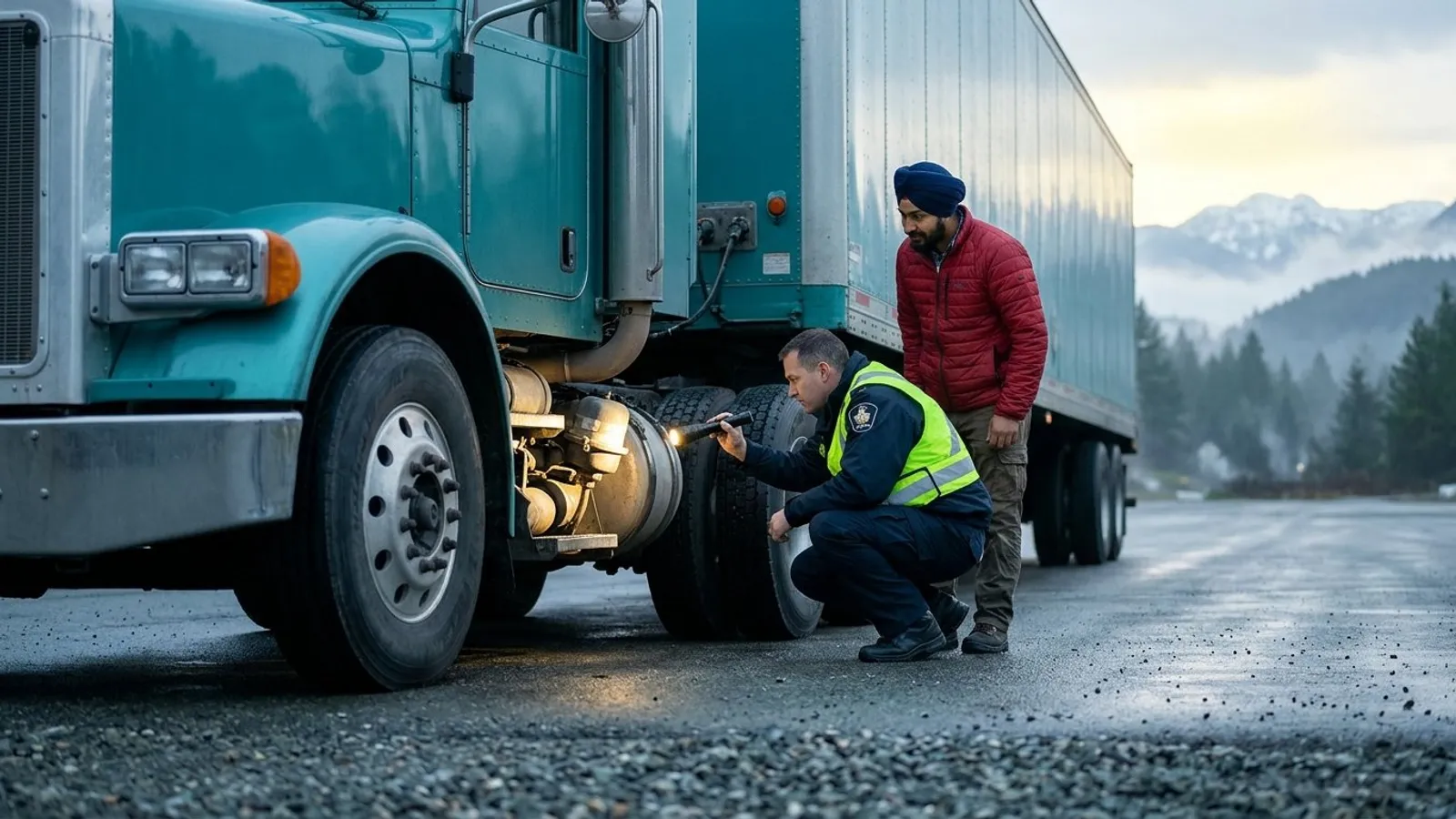
Your certificate carries a unique nine-digit CVOR number. Keep a copy of the certificate in every truck you run under it. An officer at a roadside inspection on the 401 or 410 can ask to see it.
From that day on, Ontario keeps a running safety record for your company. The CVOR program tracks things like:
- Convictions
- Reportable collisions
- CVSA roadside inspections (the North American inspection standard)
- Ministry follow-up like warning letters, interviews, audits and sanctions
Brand-new carriers start with a clean slate, and every clean inspection helps keep it that way. How that record turns into a safety rating, and what triggers an audit, is a topic of its own. For the bigger startup picture (insurance, business setup and how the CVOR fits in), see our guide on how to start a trucking company in Canada.
Set up your records before the first audit
Here's the fun part: the carriers who breeze through their first audit set up good habits in month one, not the week the letter arrives. A facility audit (NSC Standard 15 covers these) checks that your paperwork matches your operation. The auditor wants to see that you know who's driving, that they're qualified, that their hours are legal and that your trucks are maintained.
Start these files on day one:
- Driver files: licence, abstracts, medicals, training records and hire date for every driver
- Expiry dates: licences, medicals, plates, annual inspections, insurance and your own CVOR renewal
- Hours of service: ELD records kept and easy to pull up
- Inspections: daily trip inspection reports and roadside inspection results, with proof that defects got fixed
- Maintenance: work orders and repair history for every truck and trailer
If those records live in a WhatsApp chat, a shoebox and three spreadsheets, an audit means a week of digging. If they live in one place, it's an afternoon. TorqueAI keeps driver files, document expiries, inspections and maintenance records together in one system, so expiry dates get tracked instead of remembered.
That setup pays off on day one even with a single truck. A one-truck carrier in Brampton has the same compliance rules as a 50-truck fleet, just fewer files. And TorqueAI adjusts to your fleet size and where you're headquartered, so an Ontario carrier gets an Ontario setup. Our page on software for small trucking companies shows what that looks like in practice.
Renewing: put the date on the calendar now
A CVOR isn't a one-time thing. According to the renewal page, you renew every year or every two years, depending on your safety rating. Carriers rated Excellent or Satisfactory renew every two years.
The ministry sends a reminder 60 days before your certificate expires, and you have to renew before that date. As of November 2026, renewal costs $51. You'll need your CVOR number and the actual distance your trucks travelled in Ontario. That's one more reason to track kilometres per truck from the start. If you lose your certificate, a replacement costs $35.75.
Questions about your application? The CVOR office takes calls at 1-800-387-7736 (in Ontario) or 416-246-7166, and email at CVOR@ontario.ca.
Getting your CVOR is very doable. Get your papers in order, finish the course fast, and set up clean records from the first load. Do that, and your company starts its Ontario safety record on the right foot.
Questions readers ask
How long does it take to get a CVOR certificate in Ontario?+
It depends mostly on how fast you finish the online CVOR learning and assessment. Once you pass it, Ontario's posted service standard is to issue the certificate within 5 business days, then it comes by mail. You get up to 6 months to pass, so finishing the course in your first week is the quickest way to get rolling.
How much does a CVOR cost in Ontario?+
A new CVOR certificate costs $287, HST included, as of November 2026. That covers a $255 processing fee and a $32 learning and assessment fee. Renewing costs $51 each renewal period, and a replacement certificate costs $35.75.
Is the CVOR test still done at DriveTest?+
No. Since November 1, 2024, new Ontario-based applicants take an online CVOR learning and assessment instead of a written test at a DriveTest centre. You get a letter after you apply and have 6 months to pass. If you miss the deadline, you have to apply again and pay all the fees again.
Do I need a CVOR if my truck is plated in another province?+
Generally no. Trucks plated in another Canadian province or territory run under the safety certificate from that home province, such as an NSC number from B.C. or Alberta. A CVOR is for trucks plated in Ontario, plus U.S. and Mexican plated trucks that travel in Ontario.
Is a CVOR number the same as an NSC number?+
They do the same job. Every province follows the National Safety Code, but each one runs its own carrier safety certificate. Ontario's version is the CVOR, and your CVOR number is the ID that tracks your company's safety record in Ontario.