Eight ways a small fleet can cut fuel costs without buying new trucks
With diesel near $6 a gallon, the cheapest fuel savings come from idling, speed, tires, fuel stops and empty miles, not a new truck.

Key points
- U.S. diesel averaged $5.937 a gallon on Nov 16, 2026. A 120,000-mile truck at 6.5 mpg burns about $109,600 a year.
- An idling truck burns about 0.8 gallons an hour. At today's price that is about $4.75 per hour, per truck.
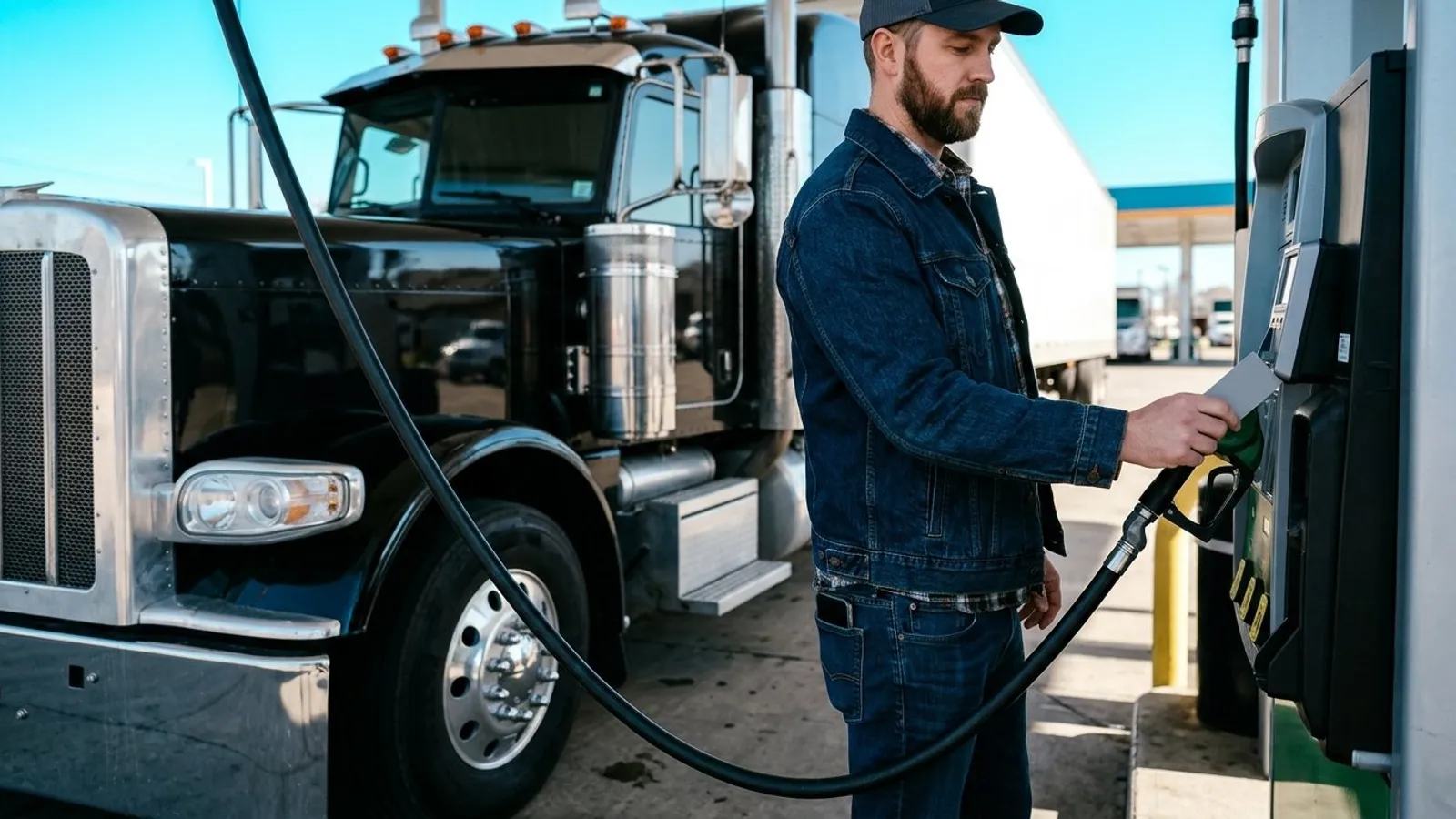
- Every 10 km/h over 90 km/h burns about 10% more fuel. Tires 10 psi low can burn up to 4% more.
- Buy fuel inside your card's discount network and plan stops in dispatch, so drivers aren't topping up wherever they happen to stop.
You can cut fuel costs at a small fleet without buying a single new truck. The biggest wins come from shutting engines off instead of idling, holding speed near 105 km/h (65 mph), keeping tires inflated, fueling inside your card's discount network, and cutting empty miles. None of these need a new truck. Most are free.
Fuel is the one cost you can fight every single day. And with diesel where it is right now, every small habit is worth real money.
What diesel is costing you right now
The U.S. Energy Information Administration (EIA) put the average U.S. diesel price at $5.937 a gallon in its weekly survey of Nov 16, 2026. You can follow the weekly EIA numbers by region on this DOE weekly diesel price tracker. That price is down from a September high but still far above a year ago.
For context, the American Transportation Research Institute (ATRI) found that fuel cost carriers about $0.48 a mile in 2025, when diesel was much cheaper. Your 2026 number is likely a lot higher.
Here is a simple example. Say one of your trucks runs 120,000 miles a year at 6.5 miles per gallon:
- 120,000 ÷ 6.5 = about 18,460 gallons a year
- 18,460 × $5.94 = about $109,600 in diesel
- That works out to about 91 cents a mile
So every 1% you save is worth about $1,100 per truck, per year. On a 10-truck fleet, a 5% cut is close to $55,000. That is real money back in your bank account.
What each fix is worth per truck
This table uses public numbers from Natural Resources Canada (NRCan) and the example truck above ($109,600 of diesel a year). The savings don't simply add up, because some of them overlap. Use it to pick where to start.
| Fix | Upfront cost | Fuel effect (source) | About what it's worth per truck, per year |
|---|---|---|---|
| Cut idling in half | Free (policy) | Idling burns ~0.8 gal/hour; ~1,500 gal/year on a long-haul truck (NRCan) | ~$4,450 |
| Hold speed at 105 km/h instead of 115 km/h | Free (limiter setting) | ~10% more fuel per 10 km/h above 90 km/h (NRCan) | up to ~$11,000 |
| Keep tires at the right pressure | Free (weekly check) | 10 psi low = up to 4% more fuel (NRCan) | up to ~$4,400 |
| Close the tractor-trailer gap to ~25 in. | Free to low | Prevents a 3–5% increase (NRCan) | ~$3,300–$5,500 |
| Low rolling-resistance tires at next change | Normal tire spend | 3% or more (NRCan) | ~$3,300+ |
| Trailer side skirts | Low to medium | 4–7% (NRCan) | ~$4,400–$7,700 |
| Bunk heater or APU instead of idling | Medium | Heater uses ~5% and APU ~25% of idle fuel (NRCan) | most of your idle fuel bill |
1. Shut it off: the idling fix
Idling is the easiest fuel to save, because the truck isn't earning a cent while it burns.
NRCan's fuel tips for truckers say an idling engine wastes about 3 litres (0.8 gallons) an hour. The average long-haul truck idles about 1,800 hours a year and uses about 1,500 gallons doing it. At $5.94, that's about $4.75 an hour and close to $8,900 a year per truck. An older Argonne National Laboratory study found the same thing: overnight idling at truck stops burns a huge amount of diesel.
Here's how to win it back:
- Write a simple idle rule. NRCan's tip: shut the engine off if you'll be stopped for 60 seconds or more. That covers shipper docks, fuel islands and long waits.
- Set the idle shutdown in the engine computer. Ask your dealer or shop about the idle timer setting. It does the reminding for you.
- Give drivers a better way to stay warm or cool. NRCan says an APU (auxiliary power unit) uses about 25% of the fuel a truck engine burns to idle. A direct-fired bunk heater uses only about 5%. For winter runs out of Winnipeg or the GTA, a heater can pay for itself fast.
- Plan for detention. Long waits at docks are where idle hours pile up. Know which shippers keep your trucks waiting, and bill detention when the contract allows it.
Many cities, states and provinces also have anti-idling rules. A clear policy helps your drivers avoid tickets, too.
2. Ease off the speed
Speed is the biggest fuel lever your drivers control. NRCan says you burn about 10% more fuel for every 10 km/h above 90 km/h. The accounting firm ATBS uses a similar rule of thumb: every mph over 60 costs about a tenth of a mile per gallon.
In Ontario, most large trucks must already have speed limiters set at 105 km/h. Quebec has the same cap. If your trucks run outside those provinces, setting the limiter at 105 km/h (65 mph) across the fleet is still a smart, free move.
Talk to your drivers before you change it. Show them the math: a truck that runs 115 km/h instead of 105 km/h can burn about 10% more diesel. On our example truck, that's up to $11,000 a year. Pair a lower governor setting with cruise control on flat highway, and ask drivers to look ahead so they brake less and coast more.
3. Check tire pressure every week
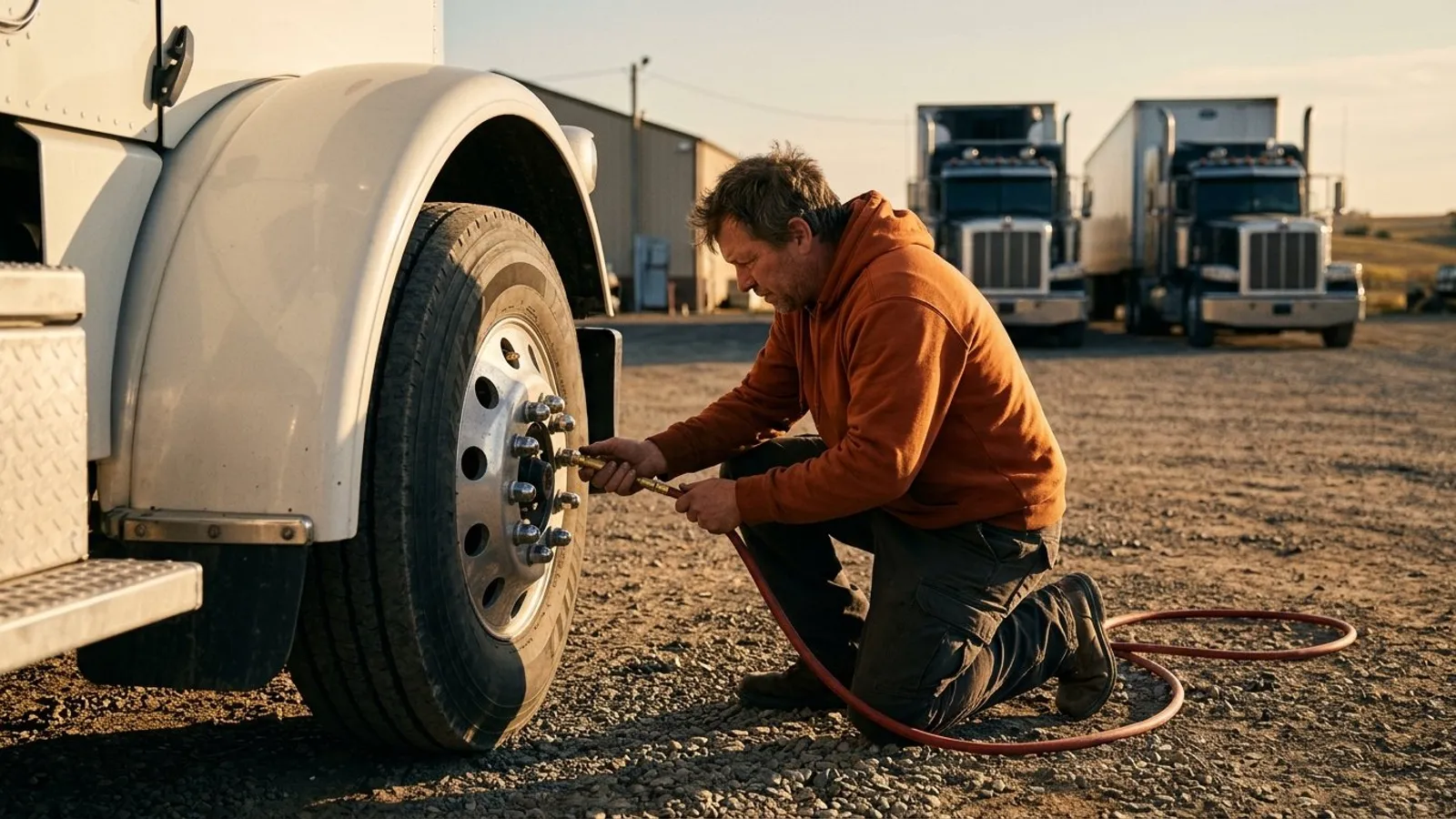
Tires are cheap fuel savings hiding in plain sight. NRCan says for every 10 psi your tires are under-inflated, you lose 15% of tread wear and burn up to 4% more fuel. Its advice: check pressure at least once a week.
Make it part of the pre-trip routine, not a "when I get to it" job. When tires wear out, ask your shop about SmartWay-verified low rolling-resistance tires. NRCan says those save 3% or more. You're buying tires anyway, so the upgrade costs little.
4. Close the gap and add trailer add-ons
At highway speed, a lot of your fuel goes into pushing air out of the way. You don't need a new tractor to fix some of that.
- Trailer gap: NRCan says keeping the space between tractor and trailer to about 25 inches (64 cm), where it's safe and legal, can prevent a 3–5% jump in fuel use. Many tractors have a sliding fifth wheel, so this can be a free adjustment.
- Side skirts: 4–7% savings on trailers that run mostly highway miles.
- Trailer tails: at least 1%.
- Roof fairings: 6–8% if your tractor doesn't have one already.
Start with the trailers that run the most highway miles. That's where they pay for themselves fastest.
5. Plan fuel stops around your discount network
A fuel discount network is the list of truck stops where your fuel card gives you money off the posted price. The discount only counts if drivers actually fuel there. If drivers top up wherever they happen to stop, you can end up paying full price without anyone noticing.
The fix is to plan fuel stops in dispatch, just like you plan pickups:
- Pick a card that covers your real lanes. Our guide to comparing fuel cards for small fleets walks through networks, fees and controls.
- Send drivers a fuel stop with the load. Name the stop and how much to buy.
- Watch regional prices. On Nov 16, 2026, EIA's survey showed California diesel at about $7.73 a gallon against about $5.55 on the Gulf Coast. Fresno and Central Valley carriers coming home from Arizona or Nevada know that gap well.
- Don't chase low-tax states. Under IFTA (the fuel tax report you file every quarter), you owe tax based on the miles driven in each state or province, and you get credit for the tax paid at the pump. The tax part evens out. The pre-tax price and your card discount are what really save money. Our IFTA deadlines guide covers the data you'll need.
6. Cut empty and out-of-route miles
The cheapest gallon is the one you never burn. ATRI's cost study notes that deadhead (empty) miles can be the single greatest drain on operating costs. On our example truck, every empty mile burns about 91 cents of diesel and earns nothing.
Before you book a load, count the deadhead miles to the pickup and the empty miles home. A $3.00-a-mile load with 200 empty miles at both ends can earn less than a $2.70 load that keeps the truck full. Knowing your profit per load before you book it makes that call easy. Also watch out-of-route miles: a driver who takes a "shortcut" through town can burn more fuel than the highway route would.
7. Train your drivers (for free)
Good driving habits are worth more than almost any part you can bolt on. NRCan's SmartDriver training series includes SmartDriver for Highway Trucking, a free online course. NRCan says its SmartDriver programs help professional drivers improve fuel efficiency by up to 35%.
In the U.S., the EPA's SmartWay carrier resources link to the same SmartDriver course, plus free fact sheets on idle reduction, driver training and automatic tire inflation. The course covers idling, smooth starts and stops, progressive shifting and trip planning.
Make it fun. Post a weekly miles-per-gallon board and celebrate the top driver. Drivers like to win, and fuel savings are a race anyone can join.
8. Make your fuel surcharge keep up
Saving fuel is half the job. The other half is getting paid for the fuel you do burn. If your fuel surcharge (the extra charge that tracks diesel prices) is stuck at an old base price, you're paying the difference yourself. Check that every customer's surcharge resets with the weekly DOE price. Our fuel surcharge worked example shows the math step by step.
Track it by truck, every week
None of this sticks unless you can see it. Each week, check three numbers per truck:
- Miles per gallon (miles from the ELD ÷ gallons from the fuel card)
- Fuel cost per mile
- Idle hours
When a truck's mpg drops, you find out on Monday, not at year end. It could be a driver habit, a low tire or a shop issue.
The hard part for most small fleets is that the miles live in the ELD, the gallons live in the fuel card portal, and the revenue lives in QuickBooks. TorqueAI pulls fuel card transactions and ELD data into the same system as your loads. That way your fuel cost sits right next to each truck's and each load's profit. Whatever tool you use, the goal is the same: one place where you can see which trucks, drivers and lanes are making you money, and fix the rest this week.
Questions readers ask
How much fuel does a semi truck burn idling?+
Natural Resources Canada puts it at about 3 litres (0.8 gallons) an hour. The average long-haul truck idles about 1,800 hours a year and burns about 1,500 gallons doing it. At $5.94 diesel, that is close to $8,900 a year per truck.
Does driving slower really save fuel in a semi?+
Yes. Natural Resources Canada says you burn about 10% more fuel for every 10 km/h you drive above 90 km/h. Setting your trucks' speed limiter around 105 km/h (65 mph) and using cruise control is one of the cheapest fuel savings you can get.
Is it cheaper to buy diesel in a low-tax state if I file IFTA?+
Not for the tax part. Under IFTA you owe fuel tax based on the miles you drive in each state or province, and you get credit for the tax you paid at the pump. What really saves money is a lower price before tax and a bigger discount at the stops in your fuel card network.
What is a fuel discount network?+
It is the list of truck stops where your fuel card gives you a discount off the posted price. You only get the discount when drivers fuel at those stops. Pick a card whose network covers your real lanes, then plan fuel stops so drivers stay in-network.
How much can a small fleet save on fuel without new trucks?+
It depends on your lanes and habits, but each 1% saved is worth about $1,100 a year on a truck burning $109,600 of diesel. Cutting idling in half, holding speed near 105 km/h, keeping tires inflated and cutting empty miles each add up. Track miles per gallon by truck every week to see your real number.