How to get an NSC number in Manitoba, and what replaces a CVOR
Only Ontario issues a CVOR. In Manitoba, your NSC number comes on a Safety Fitness Certificate, and you can line up everything for it this week.

Key points
- Manitoba has no CVOR. Your NSC number starts with MB and is printed on your Safety Fitness Certificate (SFC).
- You need an SFC for any truck or tractor registered at 4,500 kg or more, and you need it before you register the truck.
- New applications go through Motor Carrier Online Services (MCOS) with a $200 fee, proof of insurance and proof of PMVI.
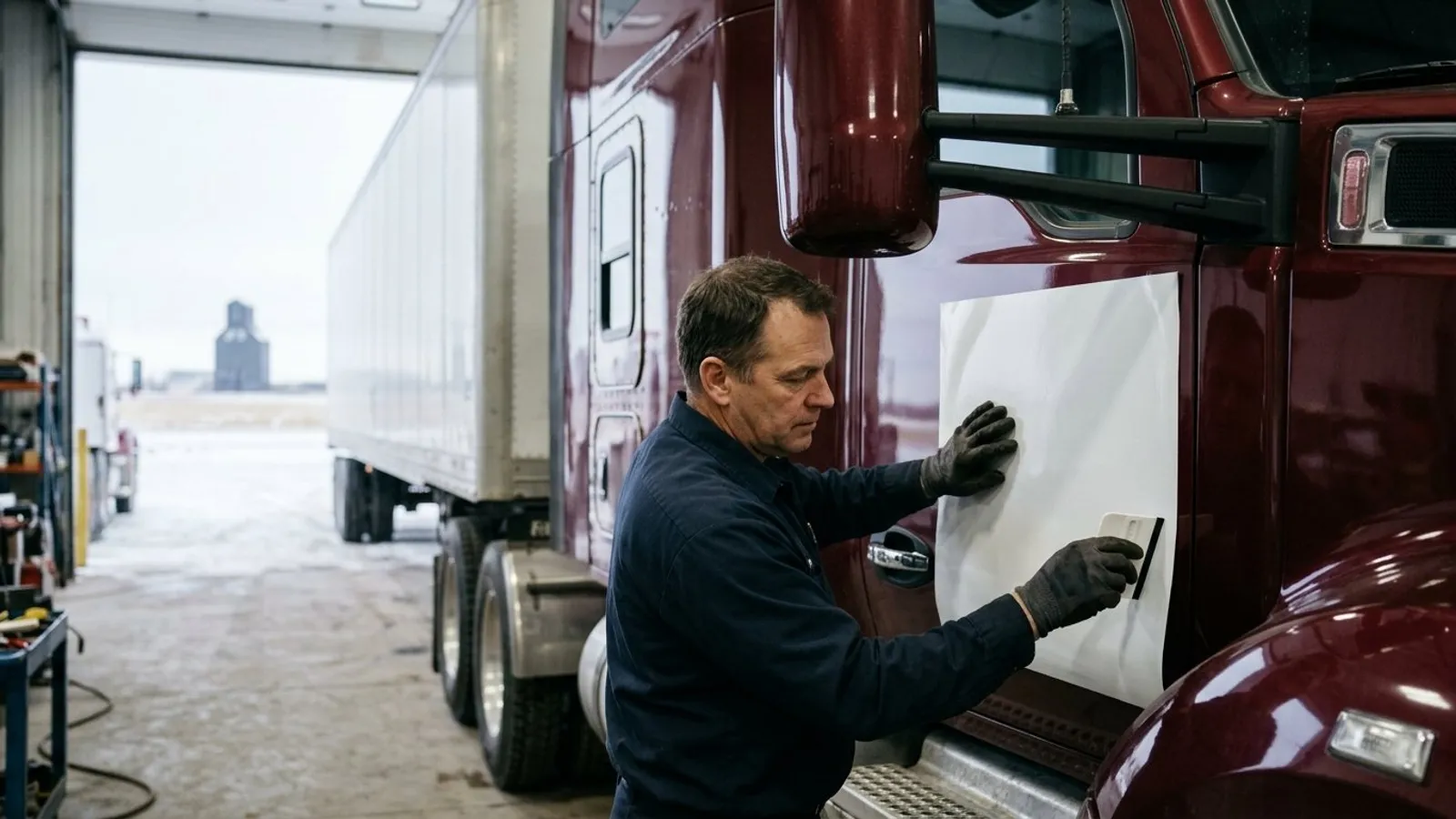
- Since August 1, 2025, regulated trucks must show the carrier's name or logo and its NSC number.
Only Ontario issues a CVOR. In Manitoba, you get a Safety Fitness Certificate (SFC) from Manitoba Transportation and Infrastructure instead. Your National Safety Code (NSC) number starts with "MB" and is printed right on it. You apply online through Motor Carrier Online Services (MCOS) and pay a $200 fee, and you need the SFC before you register your trucks.
That's the short version. The good news is that you can line up every piece of the application ahead of time. Here's the right order to do it in, so your first Winnipeg truck rolls out legal and your first audit is easy.
Manitoba's version of a CVOR is the Safety Fitness Certificate
People search "CVOR Manitoba" because Ontario's term is the one most people in Canadian trucking know. But each province runs its own program under the same national rulebook.
That rulebook is the National Safety Code. CCMTA describes it as a set of 16 standards that the provinces and territories wrote together with the trucking industry. It covers things like hours of service, carrier profiles, safety ratings and facility audits. Each province then gives carriers its own number and certificate. For a province-by-province view, see our guide on what an NSC number is and how to get one in every province.
Manitoba's SFC page says the province issues SFCs under section 312.2 of the Highway Traffic Act and under the federal Motor Vehicle Transport Act. Your SFC includes three things:
- Your safety rating
- Your NSC number
- Your legal operating name
An SFC is good for one year. You renew it every year, before you renew your vehicle registrations.
Who needs an SFC in Manitoba
You need one if you operate a regulated vehicle. In Manitoba, that means:
- a truck or truck tractor with a registered gross vehicle weight of 4,500 kg (about 10,000 lb) or more, or
- a bus that seats 11 or more people, counting the driver.
Your company only needs one SFC, no matter how many trucks you run. One truck or 300, it's one certificate.
Manitoba's who needs an SFC page lists a few exemptions:
- Personal use only. Regulated vehicles used only for personal use don't need one.
- Farm trucks inside Manitoba. Trucks with farm plates (the A6 class) don't need an SFC if they stay inside Manitoba and haul the farm's own goods. Once they leave the province, they need one.
- Leased-on owner-operators. If your truck is registered under another company's name and runs only under that company's control, you don't need your own SFC.
What to have ready before you apply
This checklist comes from Manitoba's new SFC application page and its SFC application guide.
| What you need | What Manitoba asks for | Tip to save time |
|---|---|---|
| Business registration | Articles of incorporation or business name registration from the Manitoba Companies Office | Make sure your officer info is up to date before you apply |
| Insurance | An automobile third-party liability (TPL) policy that includes property damage (PLPD) | The name on your insurance certificate, SFC and registration must match exactly |
| Truck inspections | Proof of a valid Periodic Mandatory Vehicle Inspection (PMVI) | Only needed for regulated trucks 4,500 kg or more, not trailers |
| Compliance officer training | A Compliance Officer Certification from the New Entrant Training (NET) course run by the Manitoba Trucking Association | Pick who will own safety in your company and book the course early |
| Safety plan | A safety plan sent in with your new application | Write down how you'll handle driver files, logs and maintenance |
| Online account | An MCOS account to send in the application | Create it the day you start, not the day you're ready |
| Application fee | $200 for new applicants (in place since January 1, 2023) | Fee confirmed on Manitoba's new SFC page as of November 2026 |
Pay close attention to the name match. Say your insurance certificate says "Prairie Haul Ltd." and your registration says "Prairie Haul Limited." Expect delays. Pick one legal name and use it everywhere.
Step by step: from business name to lettered truck
This order keeps things moving, because each step feeds the next.
- Register your business with the Manitoba Companies Office. The legal name you use here goes on everything else.
- Line up insurance. Ask your broker for an automobile TPL policy with PLPD, in your exact legal name. Manitoba won't issue a new SFC without proof of the required insurance.
- Get your PMVI done on each regulated truck. Manitoba wants regulated vehicles in good mechanical shape and inspected on a regular schedule.
- Train your compliance officer. This is the person in charge of safety in your company. They take the NET course through the Manitoba Trucking Association. In a one-truck company, that's probably you.
- Write your safety plan. Manitoba's start-up rules say new carriers must send one in. Keep it plain and practical. It's your playbook for drivers, logs and maintenance.
- Apply in MCOS. Create your account, fill in the application, upload your documents and pay the $200 fee. Manitoba handles applications in the order they arrive, so apply as soon as your papers are ready.
- Register your trucks with Manitoba Public Insurance (MPI). You need your SFC before you register. Your NSC number shows up on your SFC and on your vehicle registration. If you'll run outside Manitoba, you'll also go through MPI for apportioned (IRP) plates. The MPI IRP manual asks for your NSC number on that application.
- Letter your trucks. Since August 1, 2025, Manitoba's vehicle marking rules say regulated vehicles must show the operator's NSC number. It needs a clear label in front of it, like "NSC #:", "NSC:" or "NSC No.:". If more than one company's name is on the truck, yours should be the easiest to see.
Don't book your first load until your SFC is in your hand. For the bigger picture on authority, insurance and set-up across Canada, our guide to starting a trucking company in Canada walks through every piece.
Moving from Ontario, Alberta or the U.S.?
The Manitoba SFC application asks if you hold, or used to hold, any of these:
- a CVOR
- an NSC number or SFC from another Canadian province
- a carrier number from the U.S. or Mexico
Answer that question fully and honestly. Your past record follows you, and a clean history from another province is something to be proud of.
U.S. carriers have a newer rule to know. Manitoba's U.S. motor carriers page covers U.S. carriers without the same kind of authority from another Canadian province. Since September 1, 2025, they must:
- Apply for a new Manitoba SFC, meeting the same insurance, inspection, education and safety rules as new Manitoba carriers
- Renew it every year
- Show their company name or logo and their new NSC number on their trucks
Manitoba also checks the NSC marking rule on out-of-province trucks driving on its roads. If your lanes run south through Emerson, our Emerson crossing guide for Winnipeg carriers covers the border side.
Your carrier profile and safety rating
Once you have an NSC number, Manitoba starts tracking your safety record on the road. It uses a Carrier Profile System, Manitoba's version of the carrier profile under NSC Standard 7. Think of it as your fleet's report card. Roadside inspections, convictions and collisions all go on it.
You can see your own profile through MCOS. Shippers, brokers and anyone else can look up your public snapshot on Manitoba's C-SNAP carrier search by NSC number or name. A clean snapshot helps you sell when you're chasing your first direct shipper.
Manitoba has four safety rating categories. Here's what three of them mean for you:
- Satisfactory: You passed a facility audit (done by the province or a third party), and your profile shows you run safely.
- Conditional: You failed an audit, or your profile shows problems. Carriers applying again after losing their SFC also start here.
- Unsatisfactory: The province sees you as too risky. You can't register NSC vehicles in Manitoba or other Canadian provinces.
Manitoba's safety monitoring framework steps up one level at a time. It starts with education for new carriers, moves to warning letters, and ends with a ban on running regulated vehicles for high-risk carriers. Staying in good standing is very doable when your paperwork is organized.
Set up your records so the first audit is easy
A facility audit (NSC Standard 15) usually happens at your place of business. The auditor pulls a sample of your driver files and vehicle files and checks them against the rules. Manitoba's Motor Carrier Investigations Unit can also pick carriers for an audit.
Fleets that breeze through audits all do one thing: they keep every record in one place from day one. Not in a glovebox, a shoebox and three WhatsApp chats. Here's what to keep organized:
- Driver files: licences, medicals, abstracts and training records, each with its expiry date
- Hours of service logs and supporting documents
- Daily trip inspections and how each defect got fixed
- PMVI certificates and maintenance records for every truck
- Company documents: your SFC, insurance certificate and registrations, with renewal dates
The deadline that catches new carriers off guard is the yearly SFC renewal. It has to happen before your registration renewal, so put both dates on a calendar the day your SFC arrives.
Software pays for itself here, even at one or two trucks. TorqueAI keeps driver files, document expiries, inspections and maintenance records together, and warns you before anything expires. When the auditor asks for a driver file, you can pull it up in seconds. If you're comparing options, our page on a TMS for small trucking companies shows what to look for. TorqueAI runs fleets from 1 truck to 500+. It's set up around your fleet size and home province, so a Winnipeg carrier isn't stuck with a one-size-fits-all setup.
Who to call
Manitoba's Motor Carrier Safety Program answers SFC questions:
- Phone: 204-945-5322 (toll-free 1-877-340-9068)
- Email: sfc@gov.mb.ca
- In person or by mail: Unit C - 1695 Sargent Avenue, Winnipeg, MB R3H 0C4
For carrier profile questions, Manitoba's safety monitoring page lists mcsafety@gov.mb.ca or 204-945-5322.
Get your paperwork in order once and keep it in one place. Your MB number then becomes the start of a clean safety record that wins you freight for years.
Questions readers ask
Does Manitoba have a CVOR?+
No. Only Ontario issues a CVOR (Commercial Vehicle Operator's Registration). In Manitoba, the matching document is a Safety Fitness Certificate (SFC) from Manitoba Transportation and Infrastructure. Your NSC number starts with MB and is printed on it.
How much does a Manitoba Safety Fitness Certificate cost?+
New applicants pay a $200 application fee. That fee has been in place since January 1, 2023. Your other start-up costs, like insurance, truck inspections and compliance officer training, depend on your fleet and who you buy them from.
Do I need an NSC number in Manitoba for a pickup truck?+
It depends on the registered weight. Manitoba requires an SFC for trucks or truck tractors registered at 4,500 kg (about 10,000 lb) or more. Trucks used only for personal use are exempt, so a commercial pickup registered at 4,500 kg or more needs one.
How do I check my Manitoba carrier profile?+
Carriers can view their own profile through Manitoba's Motor Carrier Online Services (MCOS). Anyone can look up a carrier's public snapshot on Manitoba's C-SNAP site by NSC number or carrier name. For help, email mcsafety@gov.mb.ca or call 204-945-5322.
I'm an owner-operator leased to a Winnipeg carrier. Do I need my own SFC?+
Usually not. Manitoba says a driver who owns the truck doesn't need their own SFC if the truck is registered under another company's name and runs only under that company's control. If you register the truck in your own name or haul for yourself, you need your own SFC.